

Every grape in a blend brings its own magic (think structure, flavor, or that silky finish). Mix them, and suddenly you have a rich, smooth-tasting wine that hits all the right notes.
Wines from Bordeaux and Champagne are world-renowned for their exceptional wine blends.
So, what grapes make the perfect blends?

A Historical Tradition
Back in the day, winemakers noticed something cool: grapes growing side-by-side in the vineyard played nicely together in the barrel. They’d pick them, mash them, and boom — a field blend was born. Today, this technique lives on in wines like Port.
However, over time, winemakers began to realize that fermenting varieties separately made for a more consistent recipe. Eventually, winemakers realized that fermenting grapes separately made for more predictable wines. They’d barrel each variety separately, then blend the results into a cuvée (a fancy French word for ‘blend’). These cuvées were then sold and labeled from the regions where the grapes were grown. This is why in old winemaking countries, such as Italy and France, you’ll see wines named after a town (e.g. Rosso di Montalcino, literally ‘Red of Montalcino’).
The Most Popular Wine Blends
Some wine blends became so internationally well-known that the necessary grapes were exported throughout the world and the blends were recreated everywhere.

Bordeaux Blend
Originating in Bordeaux, France, the world’s most popular wine blend uses Cabernet Sauvignon or Merlot as its base, along with Cabernet Franc, Malbec, Petit Verdot, and (sometimes) Carménère. There are many variations of this blend, depending on where it’s grown.
Tuscany likes to shake things up: Sangiovese teams up with Cabernet and Merlot to make the famous ‘Super Tuscan.’ Down in Argentina, Malbec joins forces with Cabernet Sauvignon for a bolder twist.

GSM Blend
Originating in the south of France, this blend (also known as Côtes du Rhône Blend) uses Grenache, Syrah, and Mourvèdre as its base ingredients along with an assemblage of other regional grapes (Cinsault, Carignan, Counoise, Grenache Blanc, etc.).

Wine Blends vs. Single-Varietal Wine
The difference between blended wines and single-varietal wines is comparable to the difference between single-origin coffee and a house blend. Single-origin coffee hits you with precise, punchy flavors. Blends? They’re smoother, rounder, a little bit of everything…just like wine.
- Single-Varietal Wine: More focused flavors with more peaks and valleys in the taste profile.
- Wine Blend: More generalized flavors (e.g. berries) with a more rounded taste profile and finish.

Champagne Blend
Champagne’s dream team includes Pinot Noir, Chardonnay, and Pinot Meunier; the latter swoops in to give body and roundness. Of course, some regions add their own indigenous varieties to their sparkling wines (such as Cava) or different varieties altogether (such as Pinot Bianco in Franciacorta).
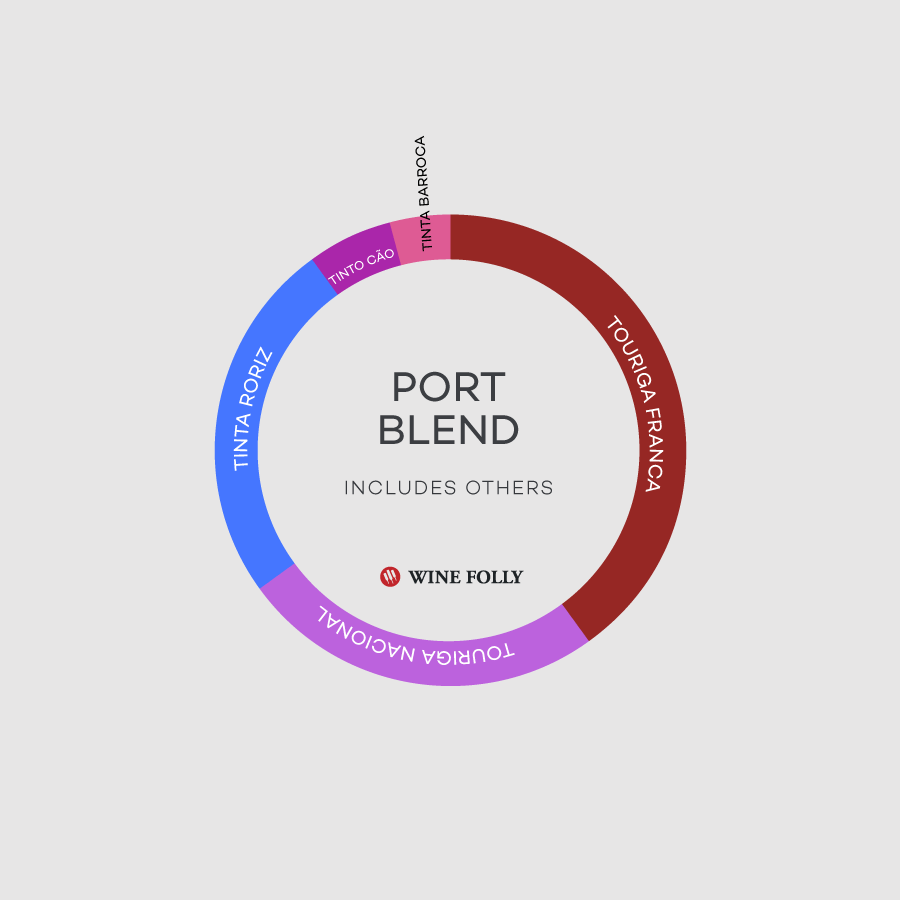
Port Blend
The most important grapes used for this dessert wine are Touriga Franca, Tinta Roriz (Tempranillo), Touriga Nacional, Tinto Cão, and Tinta Barroca. In Portugal, this wine is still made using the field-blend technique and, because of the region’s incredible grape diversity, some Ports can contain as many as 52 unique grape varieties.
Emerging Blends
As new wine regions mature, they’re creating and specializing in their own unique blends. It takes a great amount of skill to develop these blends, but more often than not, they involve the same ideology: what grows together, goes together.
Here are a few examples:
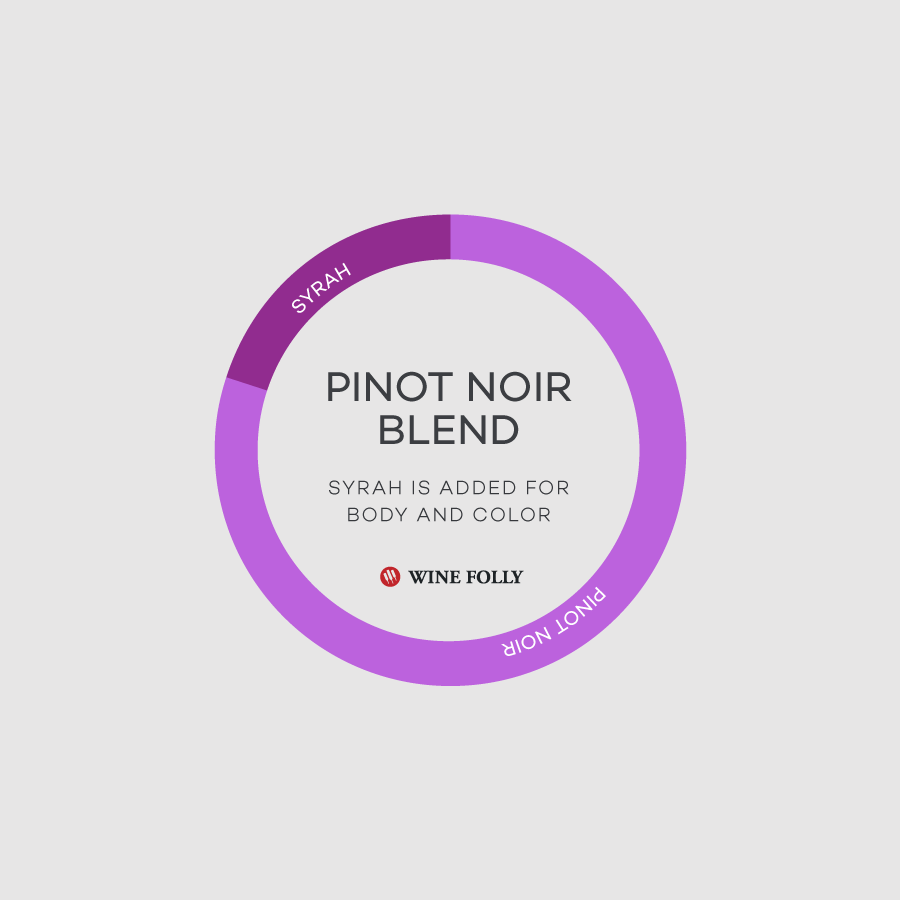
Pinot Noir Blend
To make California Pinot Noir taste bolder and lusher, a small amount of Syrah is sometimes added. You don’t see this too much in the higher-end wines, but it tends to be more common in more affordable wines, where good color and body are harder to come by.
Unfortunately, because of California’s relaxed single-varietal labeling laws (wines need only contain 75% of the variety to be called Pinot Noir), it’s often not mentioned on the label. Still, if you ever come across an exceptionally dark Pinot Noir from the Central Coast, a touch of Syrah might be the reason why.
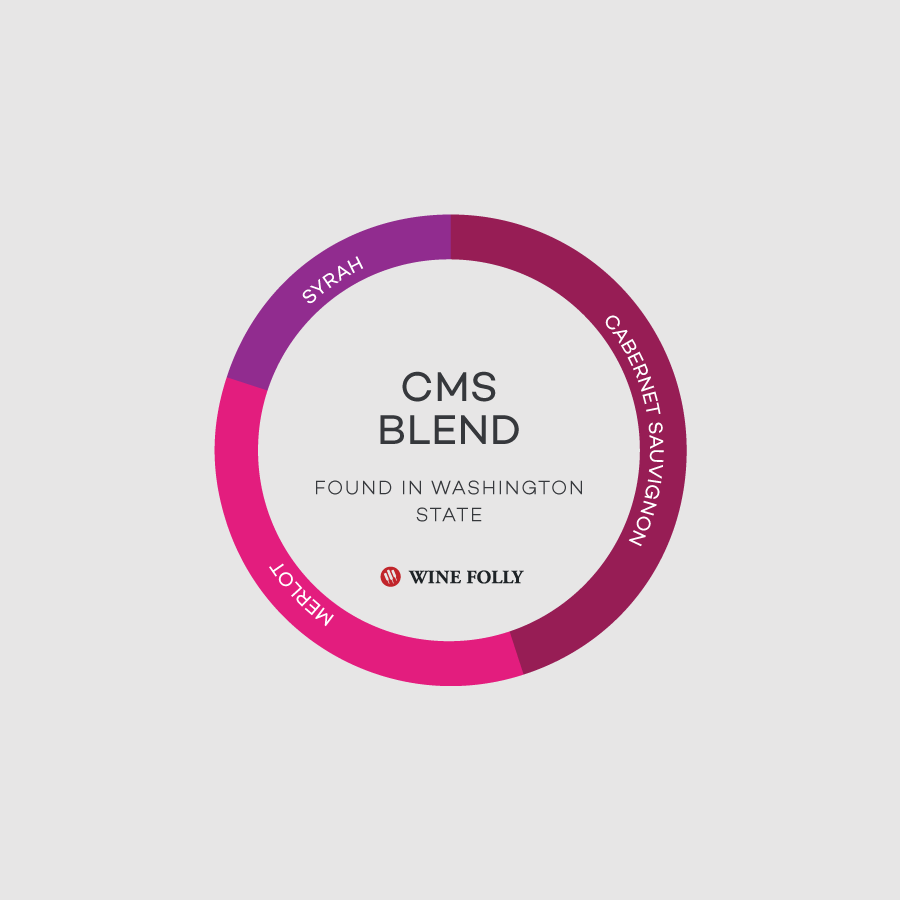
CMS Blend
Washington’s specialty is a proud lack of specialization. Why? Because nearly every grape seems to grow well in the unique, cool, high desert climate. This innovative blend is a take on Cabernet Sauvignon and Merlot, together with Syrah to round it out.
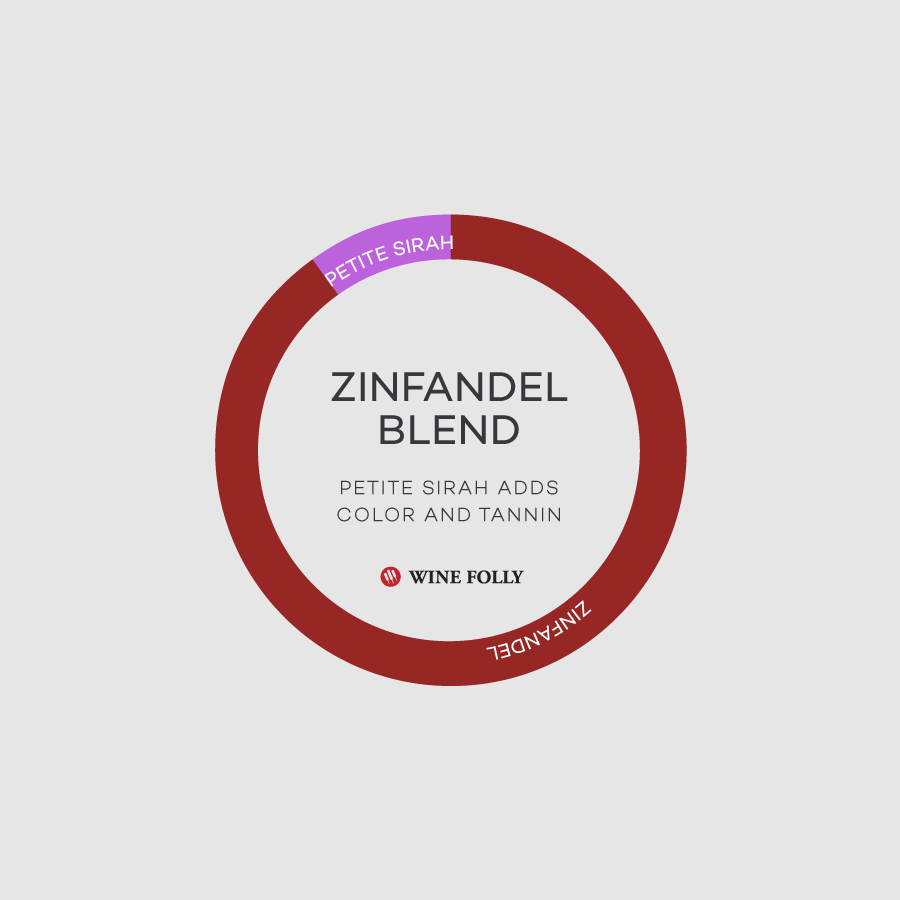
California Zinfandel Blend
Zinfandel on its own is often very light in color and sometimes too fruity to be taken seriously. When combined with Petite Sirah, the wine gains much-needed boldness and balance from Petite Sirah’s ample tannin.

Carménère Wine Blend
Carménère is almost like a lighter and more herbaceous sibling of Merlot. Because of its featherweight body, some winemakers have taken to putting a dash of Petit Verdot into the blend to give the wine a richer, rounder profile.