

Wines of Portugal are finally getting the recognition they deserve. Packed with bold flavors, unique native grapes, and exceptional value, these bottles offer a world of discovery for adventurous drinkers.
What’s wild is how under-the-radar they still are. Portugal has been making wine for centuries, yet it’s only now that more drinkers are waking up to just how dynamic, diverse, and delicious these bottles can be.
What makes Portuguese wine stand out is how different it feels from everything else. At first, Portuguese grape names can seem intimidating — but that’s part of the adventure. Over 250 native varieties thrive across dozens of micro-regions, each leaving a distinct flavor signature.
If you’re just getting into Portuguese wine or are ready to go beyond Vinho Verde and Port, this guide lays out the landscape. Here’s how to explore Portugal one glass at a time.
What To Drink From Portugal
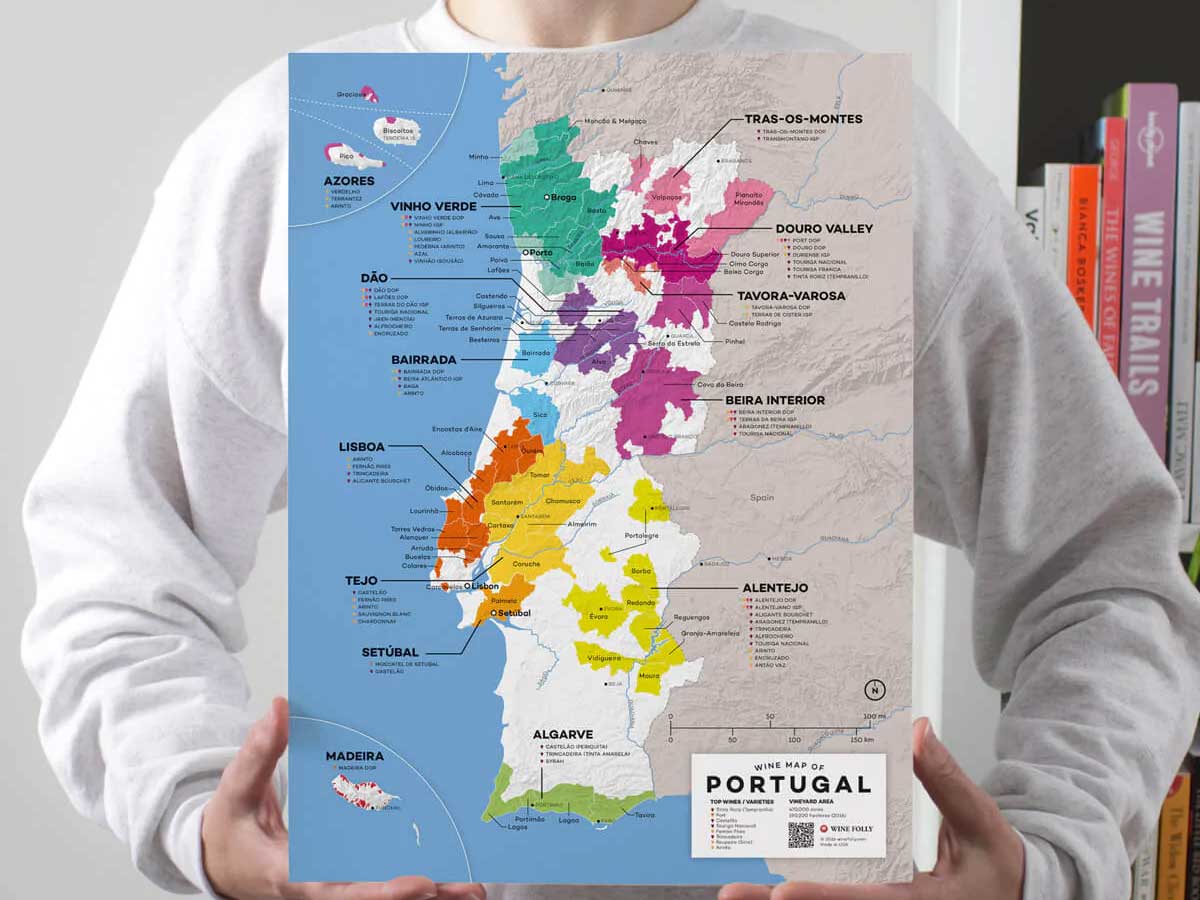
Quality Levels of Portuguese Wine

- DOC (or DOP): DOC stands for Denominação de Origem Controlada and means the wine comes from a strictly defined geographical area with recommended and permitted grapes and maximum vine yields (to control quality). Technically, there are 31 DOCs in Portugal, although 3 of them overlap, making it seem more like 28.
- Vinho Regional (or IGP): Portugal encompasses 14 regional wine (“vinho regional”) areas that have less strict rules for controlling grape type and maximum vine yields. Vinho Regional wines follow looser rules, giving winemakers freedom to experiment with grape varieties and blends outside the DOC regulations.
- Vinho (Wine): This is the most basic classification of Portuguese table wine. Chances are you won’t see this outside of Portugal.
The Comissão Vitivinícola Regional (CVR) is a “Wine and Vine” commission that governs across the country. Each CVR is regulated to ensure quality and maintain each region’s character. Because water is a problem in Portugal, the CVR also carefully monitors the granting of irrigation permissions.
Portugal Wine Terms
- Vinho Tinto Red Wine
- Vinho Branco White Wine
- Quinta Wine farm. You’ll often find this word as part of a winery’s name on the label of wines from Portugal.

Douro
Port is the most famous and copied wine from Portugal, and it’s produced in the Douro Valley. Steep Douro River hillsides have been carefully terraced by hand for centuries, a testament to the region’s ancient viticultural heritage.
Wines
- Port: Fortified sweet wines. Specifically, LBV (Late Bottled Vintage) Port, Tawny Port, and Vintage Port wines, which are the best and made by blending “port grapes” that include Touriga Franca, Touriga Nacional, Tinta Roriz (Tempranillo), Tinta Barroca, and Tinto Cão, among many others. Find out more about Port wine.
- White and Pink Port: Beyond red port, there is also white port (produced from traditional white grapes), which is standard, while rosé port is a relatively recent addition. Both of these wines are awesome to use in light-alcohol summer cocktails such as the Porto classic: White Port and Tonic
- Tinto Douro: Full-bodied reds use the same grapes as Port, yielding tannic, age-worthy wines. You can find them affordably priced for around $10–15 a bottle or, if you’re a collector, start looking into wine ratings and expect to spend about $50 for something world-class.
- Douro Branco: Light-bodied white wines. Douro Branco wines are crisp and minerally with minimal fruity flavors, subtle flinty notes, salinity, and high acidity. Douro white wines are a little harder to find and include the white port varieties of Rabigato, Viosinho, Gouveio, and Folgazão, among others.
Terras de Cister (Távora e Varosa)
Terras de Cister: Sparkling wines
If you head south over the mountains from the Douro, you’ll encounter a tiny mountainous region that was first planted by Cistercian monks (the same group of monks who helped shape Burgundy’s wine legacy). Cooler nights make grape ripening more challenging than in the Douro, resulting in sparkling wines with elevated elegance and crisp acidity. Because of the attraction to bubbles, there are a growing number of Chardonnay and Pinot Noir vineyards being planted alongside regional varieties like Malvasia Fina (aromatic white), Sercial (light white), Gouveio (light white), Aragonês (aka Tempranillo), Tinta Barroca (red), and Touriga Franca (red), among others.
Transmontano (Trás-Os-Montes)
Tinto Transmontano: Full-bodied red blends
If you head north over the mountains from the Douro, you’ll find another small wine-producing region called Trás-Os-Montes. Transmontano, a regional red blend, is the most commonly exported wine from this northern region. Wines are full-bodied and punchy, with higher alcohol levels.
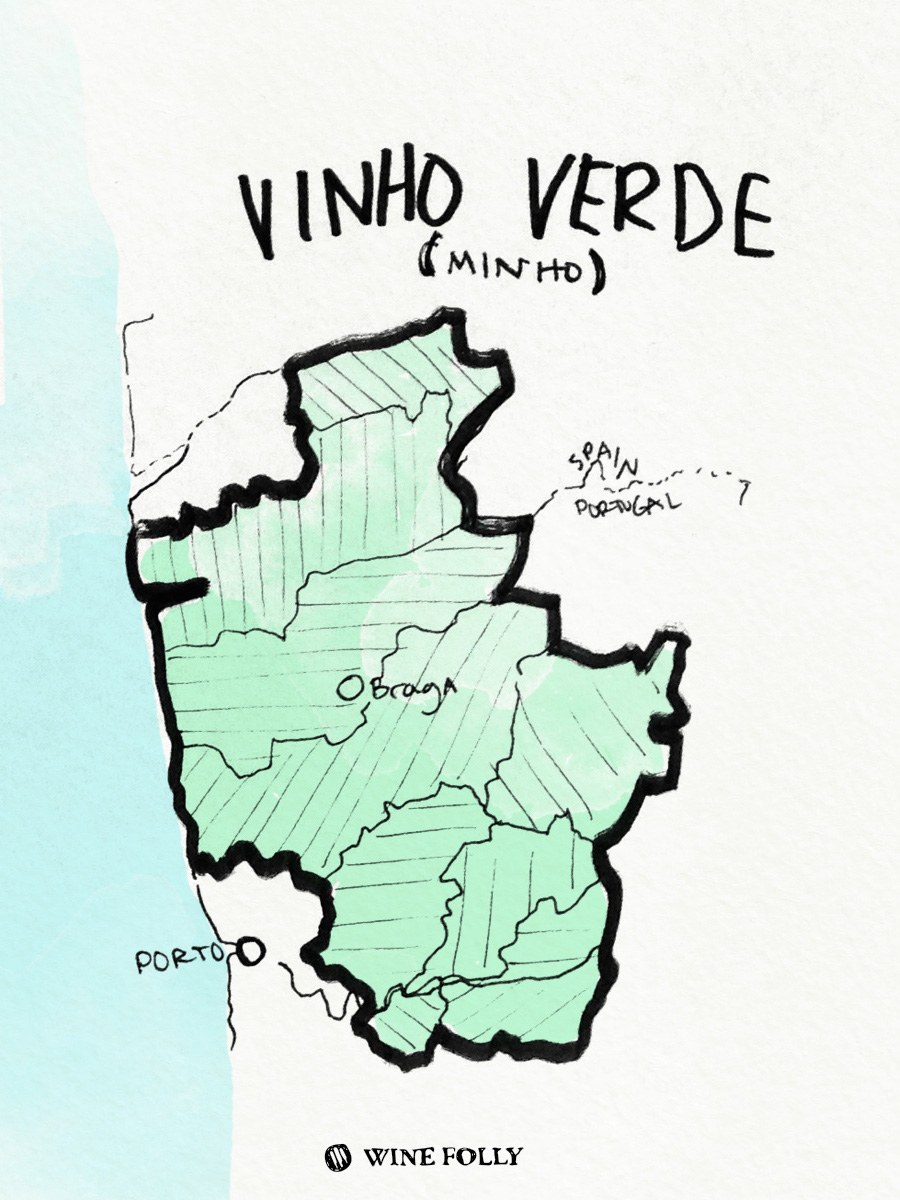
Minho (Vinho Verde)
Chances are, if you’ve enjoyed an ice-cold Portuguese wine on the beach, it was Vinho Verde. Best served young, when the wine is at its peak of aromatics and crisp acidity, Minho wines are ideal alongside salads, fish, and vegetable dishes, and even pair well with citrus-driven sauces.
Wines
- Branco Vinho Verde: Light-bodied white wines. Wines often have a slight spritz and fruity, lemonade-like flavors with notes of melon, gooseberry, and chalky texture. White Vinho Verde often blends local grapes such as Arinto, Azal, Trajadura, Loureiro, and Alvarinho (Albariño in Spain). Single-varietal wines, particularly Alvarinho, Loureiro, and Azal, showcase the region’s vibrant aromatics and crisp acidity.
- Rosado Vinho Verde: Rosé. The Rosado wines offer red berry flavors with quenching acidity like lemonade. The reds and rosés of Vinho Verde are found primarily in the southern part of Minho in the sub-regions of Amarante and Paiva. Red grape varieties include Alvarelhão, Amaral, Borraçal, Espadeiro, and Padeiro (quite rare).

Alentejo
The Alentejo region feels similar to California (save for a few marble castles to remind you that you’re still in Europe). It features low rolling hills of wheat, even hot temperatures, and tons of sun. Many progressive and modern wineries here make red wines with generous fruit and mocha flavors and refined tannins from careful oak aging. White wines from the Alentejo range from medium-bodied refreshers to full-bodied, similar to Chardonnay.
Wines
- Tinto Alentejo: Full-bodied red wines that are typically blends made with Aragonês (Tempranillo), Trincadeira, Castelão, Alfrocheiro, and Alicante Bouschet.
- Branco Alentejo: Light- and full-bodied white wines made with Arinto (fuller in style), Antão Vaz (fuller in style), Roupeiro, and Fernão Pires (an aromatic white variety).
- Alentejano (IGP/Vinho Regional): Full-bodied red and white wines from a larger encompassing region that may include non-indigenous grape varieties (Viognier and Syrah are growing in popularity here).
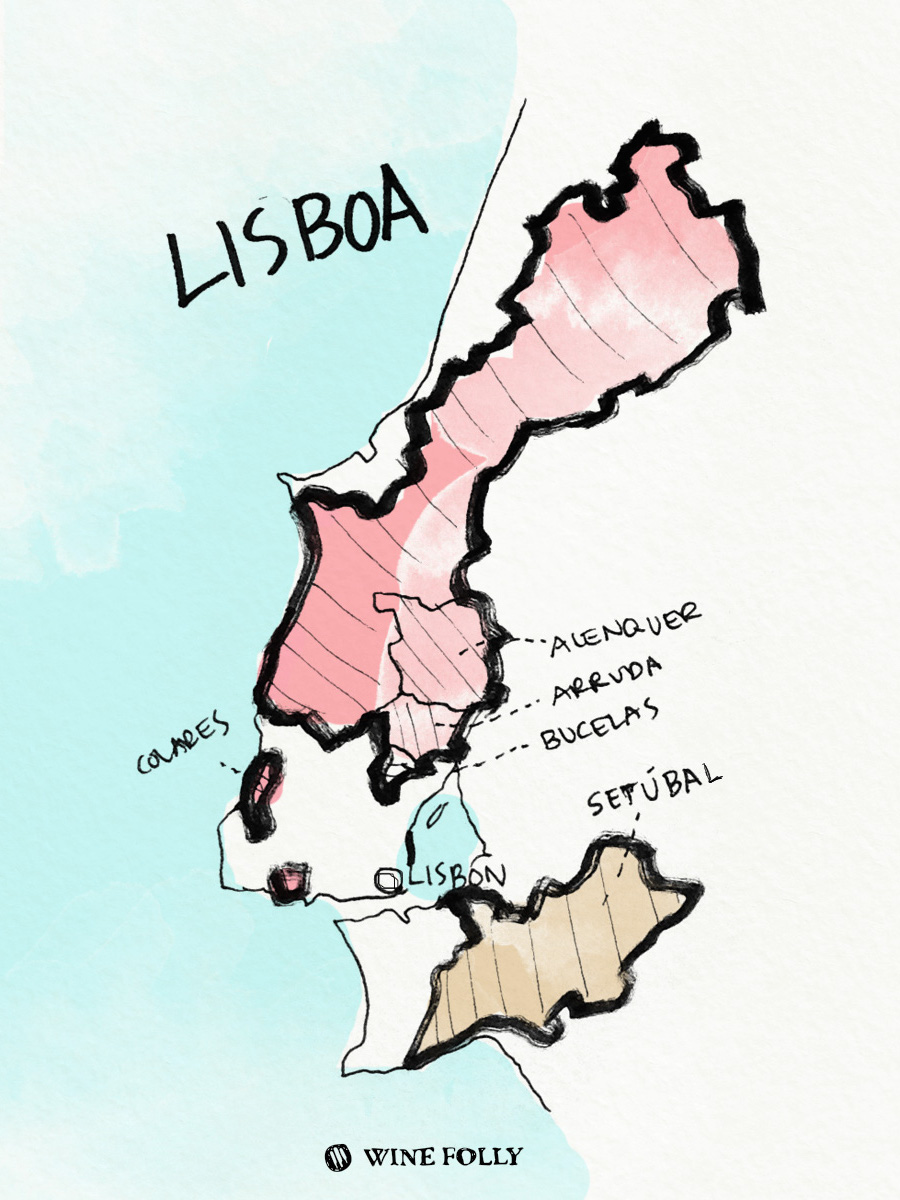
Lisboa
One of the most dynamic and varied regions is a strip that runs from Lisbon northward along the coast. Many wines from the various regions in Lisboa (Alenquer, Bucelas, etc.) make their way into stores internationally. While there is a great quality found in Lisboa (Bucelas, Colares, Alenquer, Arruda), most of the wines you’ll find available are affordable (around $10 a bottle) and great for everyday drinking.
Wines
- Alenquer: Concentrated, high tannin red wines made with Castelão, Alfrocheiro, Aragonês (Tempranillo), and Touriga Nacional
- Bucelas: Light-bodied, citrus, beeswax-driven, age-worthy white wines made with Arinto. Typically very fine with 4+ years of age.
- Arruda: Full-bodied red wines that often include international grape varieties like Cabernet Sauvignon and Syrah
- Colares: A rare find. Golden colored, full-bodied white wines in an oxidative style made with Malvasia Fina (grown on the beach cliffs)
- Óbidos and Lourinhã: Light-bodied aromatic white wines, often featuring Fernão Pires
- Torres Vedras: Simple, low-alcohol refreshing white wines.
Setúbal
The region of Setúbal is famous for a fantastic rich, deep gold-colored dessert wine called Moscatel de Setúbal.
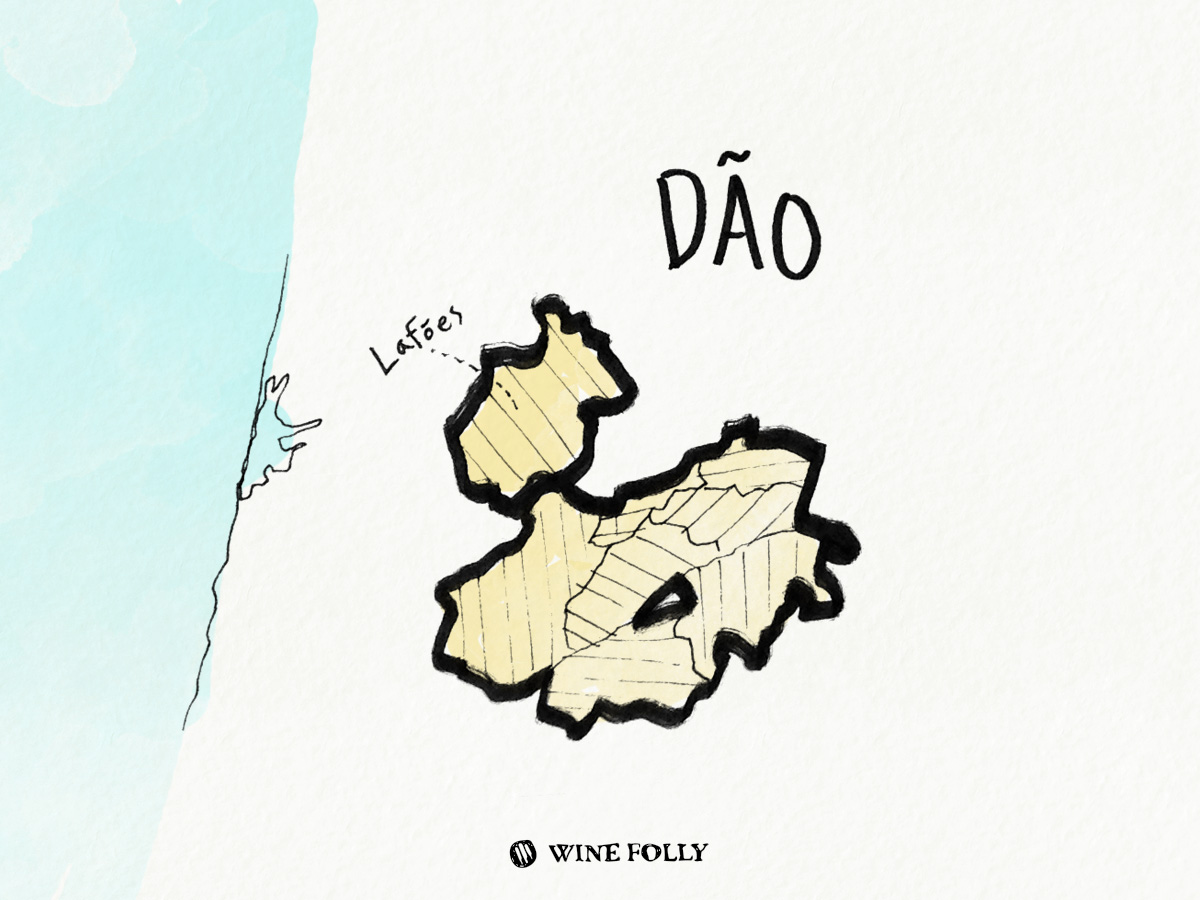
Dão
Collectors have identified Dão as a place to watch for quality. Wines from Dão are lighter in style than those from Douro, but they age very well due to the development of tannin and acidity. High-altitude vineyards with decomposing granite and schist soils — like those in Douro and Priorat — give Dão wines their characteristic structure. Jaen, the Dão name for Mencía from northwestern Spain, expresses medium- to full-bodied red fruit flavors with bright acidity and moderate tannins.
Wines
- Dão Alfrocheiro: Medium-bodied red wine with red berry flavors, licorice, and spice notes.
- Dão Jaen (a.k.a. Mencía): Medium- to full-bodied red wine. Raspberry and black cherry flavors with moderately high acidity and mouth-drying tannin.
- Dão Touriga Nacional: Full-bodied red wine. Deep black fruit flavors with chocolate and mocha, with refined tannins and medium-plus acidity.
- Terras do Dão and Terras de Lafões: The Vinho Regional wines of the Dão with more experimentation and blends that include international varieties (Indi blends).
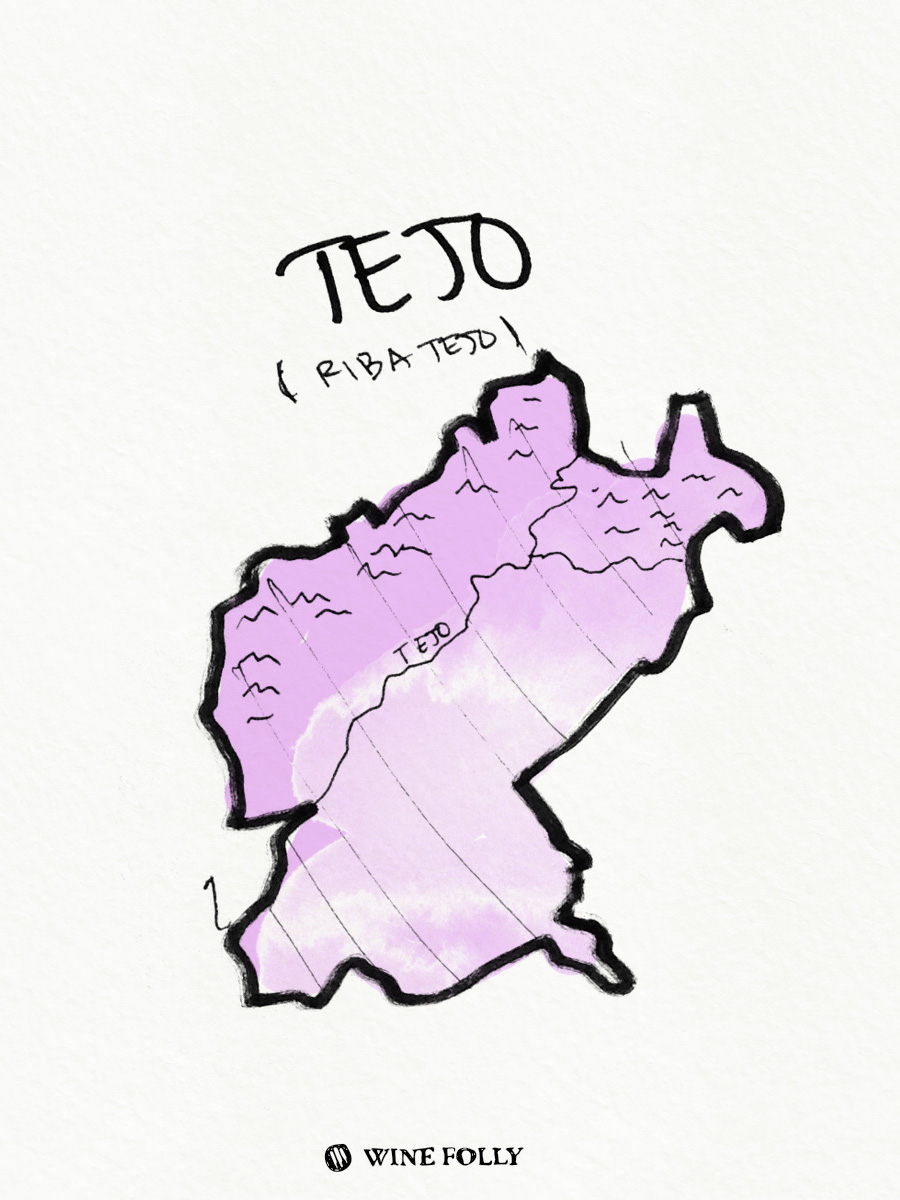
Tejo
Tejo, formerly Ribatejo, is a mostly flat region with extensive vineyards producing both everyday wines and higher-quality expressions in the central hills. You’ll find that Tejo plants all kinds of grapes, from Alvarinho (the grape of Vinho Verde) to the full-bodied blackish Alicante Bouschet. The good thing about the region is that the wines are almost always under $15. As you move toward the center of Tejo and into the hills towards the coast, the wines get better. Central Tejo is a good region for getting excellent value from Portugal.
Wines
- Red “Indi” Blends: Look into blends with Cabernet Sauvignon, Syrah, Touriga Nacional, Trincadeira, and Castelão
- White “Indi” Blends: Look into blends with Fernão Pires (an aromatic white wine), Arinto, Sauvignon Blanc, and Chardonnay

Beira Atlântico (Bairrada)
Baga is a highly productive red grape of Beira, grown in Bairrada. In the past, the wines made with 100% Baga had a dense structure, high acidity, and a tar-like finish. Top Baga wines can evolve into refined expressions over 10–20 years, while modern winemaking now also produces approachable, early-drinking styles. Today, things are changing. With careful vineyard practices and vinification (winemaking), you’ll find a much wider range of Baga, offering a stark contrast to traditional Bairrada Clássico. From the aromatic and delightfully pink sparkling wines by Luis Pato to the soft, structured, light-bodied red wines by Niepoort that remind us of Pinot Noir, this region is one of the new frontiers of winemaking for the Portuguese. The wine geeks are very interested.
Wines
- Tinto Bairrada: Made from Baga and ranging from dense, tar-like, high-acid reds to delicate, red fruit-driven wines with finely textured tannins and the ability to age.
- Branco Bairrada: Made from the aromatic Fernão Pires (called Maria Gomes here), Bical, and Arinto
- Sparkling “Brut” Bairrada: Delicious beeswax-driven sparkling wines made with early-picked Baga, Fernão Pires, and others.

Beira Interior
The most mountainous region in Portugal (it snows here!) has one of the most challenging climates for grape production. Despite hot summers, the shorter growing season creates wines with lean red fruit and chalky minerality. In contrast, white wines tend to be lean and have chalky minerality. Many old vines and producers utilize native yeasts and organic viticulture, so we hope the region will continue to improve.
Wines
- Tinto Beira: Red fruit-driven wines of Marufo, Bastardo, Alfrocheiro, Trincadeira, and Touriga Nacional
- Branco Beira: Lean, chalky white wines of Síria, Arinto, and Malvasia
Madeira & Pico Island (Azores)
Both Madeira and Pico Island are places like no other. Pico Island has a designated UNESCO area covered with a network of stone walls, each protecting a vine (or two) of Verdelho, the leading regional white wine grape. The good thing about wine from Pico is this golden, viscous liquid that is hauntingly sweet, tart, and somewhat salty, with a smokiness from the volcanic landscape.
On the other hand, Madeira has a fascinating, daunting, and somewhat stressful history as one of the world’s most collectable and appreciated fortified wines. These wines are not for dabbling. Madeira and Pico wines demand attention. Approach them with curiosity, and you’ll discover the skill and history behind these unique fortified and volcanic wines.

Algarve
For sun-worshippers, Algarve is a thing to behold. Perhaps due to the high level of tourist excitement, Algarve also boasts nearly 2,500 acres (1,000 hectares) of vineyards. Naturally, as a hot, sunbaked region, the wines aren’t designed to age, but there is hope, particularly for reds made from Alicante Bouschet, Syrah, and Aragonês (aka Tempranillo). Drought-tolerant grapes maintain bright acidity while producing smoky-sweet, dusty flavors reminiscent of select South Australian reds.